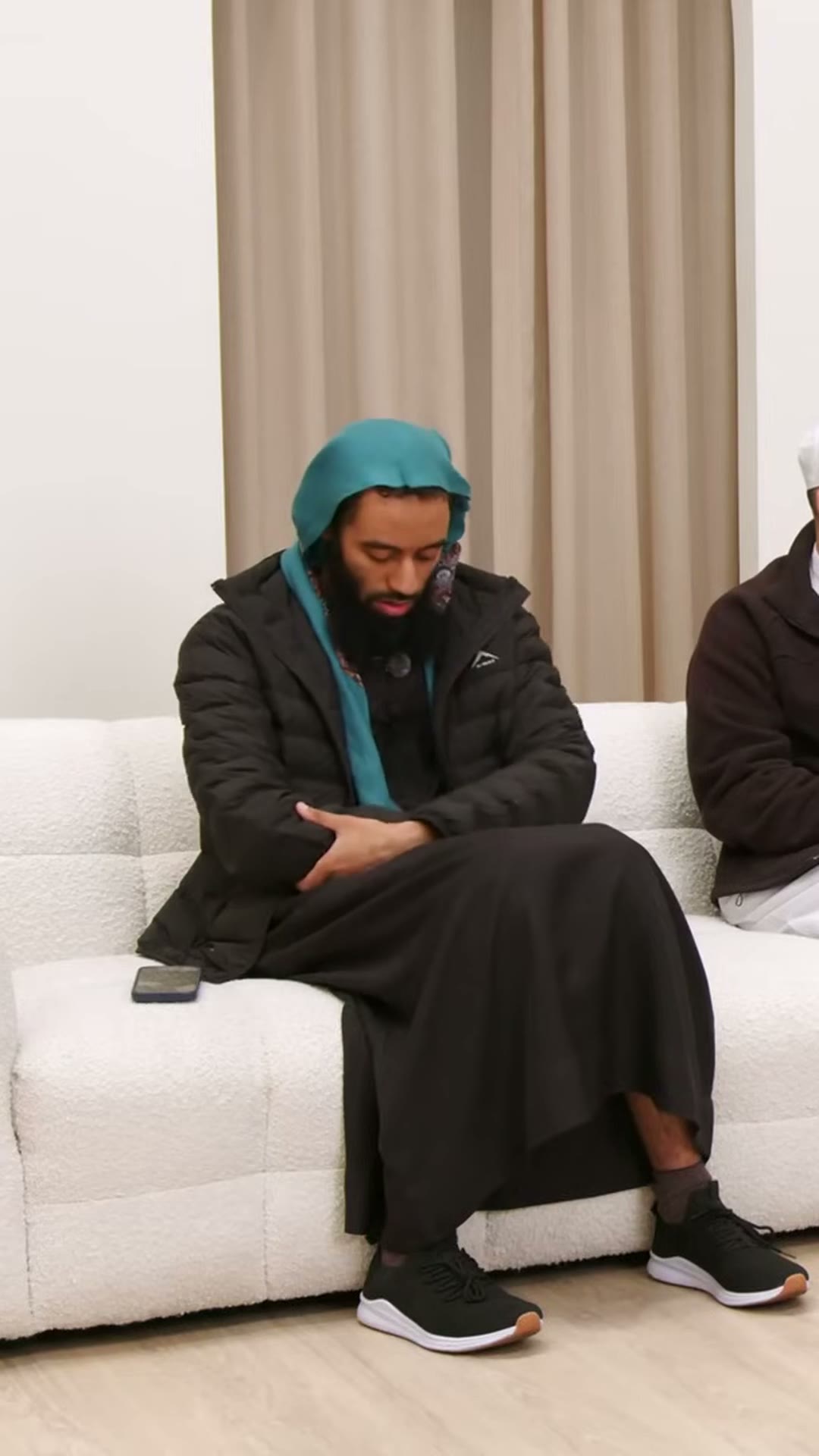
Don't separate your manners from your worship (1/20) Many Muslims pray and fast but have no manners. Good manners are the foundation — and the three relationships: with Allah, yourself and people. لا تفصل أخلاقك عن عبادتك. Credit: Simple Dawah Podcast — Ustadh Abu Taymiyyah & Sh. Abu Bakr Zoud. All rights to Simple Dawah. Full episode: https://www.youtube.com/watch?v=rPw9OdPFdCs #manners #akhlaq #SimpleDawah #AbuTaymiyyah #AbuBakrZoud #أخلاق_المسلم
Transcript
Can you share for us what is the basic manners of a Muslim? What should they be? What should the values of a Muslim, what should they be upholding? Now. Bismillahir Rahmanir Rahim. Alhamdulillah wassalatu wassalamu ala Rasulillah wa ala alihi wa sahbihi ajma'in. Oh my brother in Islam, and when we speak about the matter of manners, we find that there are Muslims, their attitude towards manners is a matter of a secularist attitude. What I mean by that is that secularism is to divide between the affairs of the state and religion. And many Muslims, unfortunately, have done the same thing with manners and their worship. They have divided between manners and worship. So you'll find that a Muslim, perhaps, he is upon his worship. He prays, he fasts, he does his adhkar, Quran, but when it comes to manners, zero. No manners at all. Divided between manners and worship. Well, this is a great calamity. And the scholars, they said, that everything has a foundation, right? You cannot build without a foundation. And the foundation of Islam is good manners. So if there is good manners, then a person could build in his relationship with Allah. Now his salah will make meaning, his Quran will benefit him, and it will continue to grow and increase. And answering that question of, you know, the manners itself and what is required from a Muslim, we have a hadith of the Prophet Sallallahu Alaihi Wasallam that discusses this. This is the hadith of Abu Dharr and Anas ibn Malik. In where he says that the Prophet Sallallahu Alaihi Wasallam said, "Ittaqillaha haithuma kunta, wa atbi'is-sayyi'atal-hasanata tamhuha, wa khaliqin-nasa bi khuluqin hasan." The scholars, they said these three phrases of advice, each one referred to a certain relationship you have. The first one is your relationship and your manners with Allah Azza wa Jall. And that is built upon at-taqwa. So you fear Allah Azza wa Jall wherever you may be by doing what He commanded and avoiding that which He prohibited. The second one, that's a relationship you will have with your own self. If you ever fell into a sin or a wrongdoing, follow it up with a good deed and that would wipe away the bad deed. That's good manners with your own self. And the final relationship that we have is with mankind, with people. Generally, the Muslim, the kafir, and others. Here, the Prophet Sallallahu Alaihi Wasallam said, "wa khaliqin-nasa bi khuluqin hasan." Behave well with the people. Now, and that includes in your dealings and in your words with them. Allahu A'lam. And that's, you know, khuluqin hasan, that's not just a, a, you know, mediocre standard, but the best of standards. Al-khuluq al-hasan, and the Prophet Sallallahu Alaihi Wasallam is a role model in this matter. So we learn from his character and we try to emulate what the Prophet Sallallahu Alaihi Wasallam, uh, you know, had of great character and morals. So yes, by saying the best of character, then when you ask, what is good character? We say, look at the Prophet Sallallahu Alaihi Wasallam, observe his character, and follow that. Subhanallah. Now.