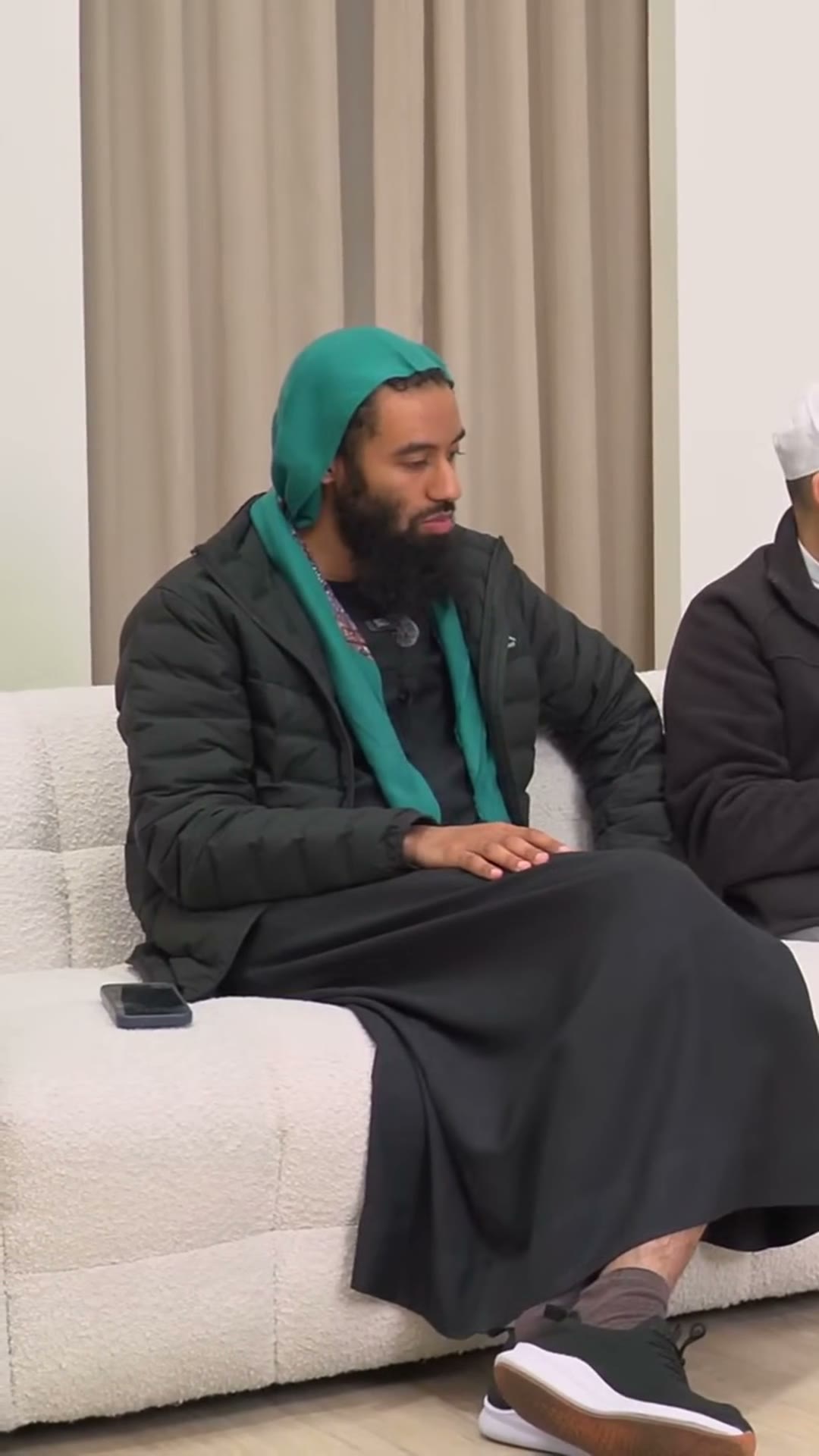
Why the Salaf could differ without fighting (18/20) Online pile-ons vs. scholars who debated with love and respect. Only discuss with the sincere. اختلف السلف ولم يتخاصموا. Credit: Simple Dawah Podcast — Ustadh Abu Taymiyyah & Sh. Abu Bakr Zoud. All rights to Simple Dawah. Full episode: https://www.youtube.com/watch?v=rPw9OdPFdCs #manners #akhlaq #SimpleDawah #AbuTaymiyyah #AbuBakrZoud #أخلاق_المسلم
Transcript
And and and this is, you know, unfortunate. You see it in the communities, you see it among the brothers. People with I don't know, 1% knowledge in his brain. Heck, he wants to honor. I am right, and they are wrong. Why I don't care what the proofs are, because my sheikh taught me such and such. I'm not in no position to even discuss with my sheikh, but I'll take what he said and I'll cause problems and troubles with it. It comes to sitting with a mate of mine, you know. Yeah. Subhan Allah. So, you know, this is another issue. But if one party and the second party, they intended, Allah places barakah in this. The ulama differed among one another, and the Sahaba differed among one another. How come they want to, you know, fall outs between them, no punching and shoving between them and no cursing between them. Why? How the Sahaba, when they discussed a matter or they debated a matter, it was the haq. No one had a hawa that he was following. No one had a kind of desire or an opinion he stuck to that he wanted to prove his point over others. It didn't happen like that. And this is khilaf among the Sahaba, and it did not change anything concerning their relationship and the love and the respect they have with one another. No. Even the verse in Surah Nisa, and here's the key, right? We talked about the intention of wanting, right, to do what is best. The intention goes a long way. He said, like, if you see or you sense a dispute now between husband and wife, bring out a party from this side and then a party from the other. Look what Allah says. If they have the intention of wanting to rectify, Allah will give them success. He will give them taufiq, subhan Allah. Look how the intention goes a very long way. But if, what can we, the the the if they don't have that, forget about it. This is why, you know, sometimes people ask me for discussions, debates, and right, they want to talk about certain deeni related issue. I always look at the masalih and the mafasid. You know, weighing between the pros and the cons. And I think this is very, very important. And I sit with people of different persuasions and leanings across the board. If I see this individual to be sincere, perhaps we can get somewhere with that discussion. However, if I sense from you that you are someone that is going to be volatile or I'm not even going to entertain it. Even if that individual has the same aqeedah as me. Because you find people like this on every side of the spectrum. You're somebody like that, what's the benefit that we're going to get out of this sitting? But when you you see that individual is genuinely trying and he's attempting to find the truth, we can sit down, insha Allah, we can talk, we can have these discussions. You see this on Twitter all the time. I was showing you I think the other day you saw, right, on TikTok, Twitter, people just want to get at one another and they're expecting you to respond. Literally, they're waiting. They can't wait for you to respond. This is not the setting to be having these discussions. There's a way to go about it.